Publicidad
Comprender el período de firma temprana de 2026: una guía completa para los fanáticos del fútbol americano universitario (actualizaciones recientes)
El panorama del reclutamiento de fútbol americano universitario es un tapiz en constante evolución y, en su corazón, se encuentra el increíblemente impactante período de firma temprana de 2026. Para los fanáticos, entrenadores y, lo que es más importante, los futuros estudiantes-atletas de la Clase de 2026, este período representa un momento crucial: la culminación de años de trabajo duro, dedicación y toma de decisiones estratégicas. Lejos de ser una mera formalidad, el período inicial de firma ha remodelado cómo los programas construyen sus listas y cómo los reclutas navegan por sus futuros universitarios. Esta completa guía profundizará en todas las facetas del período de firma temprana de 2026, ofreciendo información sobre su historia, su estructura actual, actualizaciones recientes y sus profundas implicaciones para el deporte.
Desde su creación, el período de firma inicial ha traído tanto entusiasmo como complejidad a la ruta de reclutamiento. Brinda una oportunidad para que los estudiantes de último año de secundaria finalicen sus compromisos meses antes del Día Nacional de la Firma Tradicional, ofreciendo una sensación de alivio y certeza. Sin embargo, también comprime el cronograma de toma de decisiones, intensificando la presión sobre los atletas jóvenes y el personal de entrenadores por igual. A medida que miramos hacia el período de firma temprana de 2026, comprender estas dinámicas es crucial para cualquier persona que invierta en el fútbol americano universitario.
La génesis del período de firma temprana: por qué es importante
Antes de la llegada del período de firmas tempranas, todos los reclutas de la Subdivisión de Football Bowl de la NCAA (FBS) firmaron sus cartas de intención nacionales (NLI) el primer miércoles de febrero. Este Día Nacional de la Firma tradicional fue un evento singular de alto riesgo. Si bien generó una inmensa atención de los medios, también presentó desafíos. Los reclutas enfrentaron una presión prolongada, y los entrenadores a menudo se encontraban luchando para asegurar compromisos en las últimas semanas, lo que llevó a cambios de última hora y resultados impredecibles.
Publicidad
La NCAA introdujo el período de firma temprana en diciembre de 2017 para abordar estos problemas. Los objetivos principales eran:
- Proporciona estabilidad: permite a los reclutas que se mantuvieron firmes en sus decisiones a firmar con anticipación, reduciendo la posibilidad de que otras escuelas se retiren con tiempo y permitiéndoles concentrarse en su último año académico y atletismo.
- Presión de facilidad: aliviar parte de la intensa y prolongada presión sobre los reclutas y sus familias al ofrecer una oportunidad más temprana para finalizar sus compromisos.
- Agilizar los esfuerzos de coaching: libera al cuerpo técnico para que se centre en evaluar a los prospectos no firmados y prepararse para los partidos de bowl o la próxima temporada, en lugar de solo en batallas de reclutamiento en etapas avanzadas.
La introducción del período de firmas iniciales fue un cambio de juego. Casi de inmediato, se convirtió en el período de firma dominante, con la gran mayoría de los reclutas de FBS que optaron por firmar en diciembre en lugar de esperar hasta febrero. Este cambio ha alterado fundamentalmente los calendarios y estrategias de reclutamiento, lo que convierte al período de firma anticipada de 2026 la fecha más crítica en el calendario de reclutamiento para la clase de 2026.
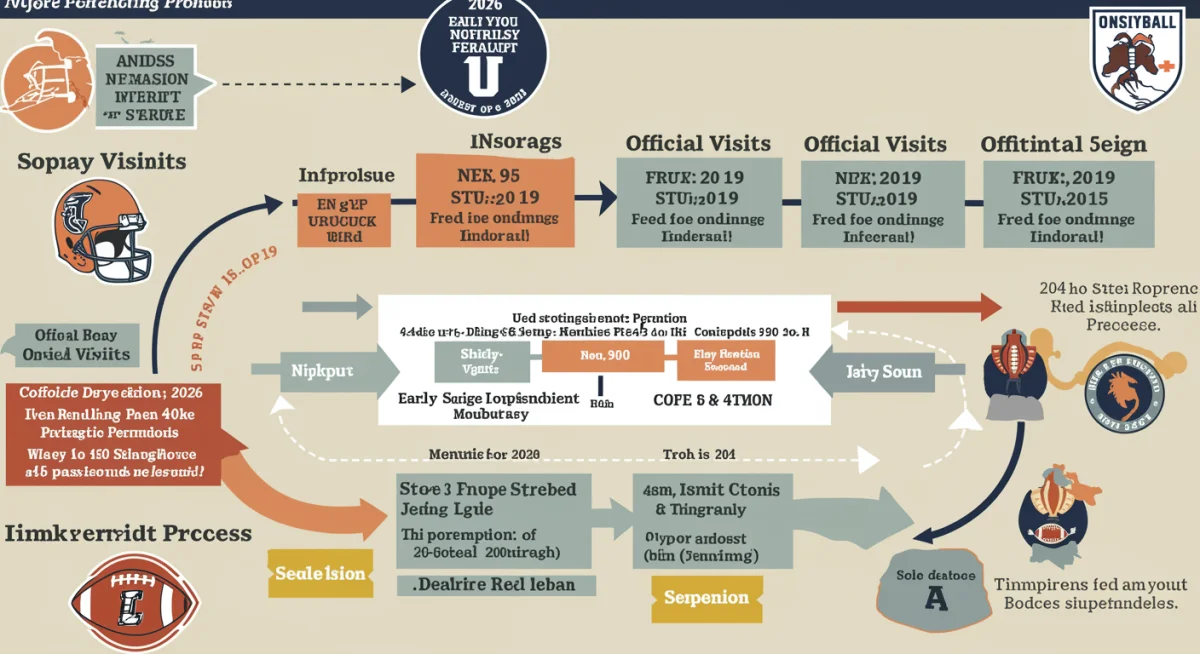
Fechas clave y estructura del período de firma anticipada 2026
Si bien las fechas específicas se confirman oficialmente más cerca del período, se espera que el período de firma anticipada de 2026 siga el patrón establecido. Por lo general, abre el tercer miércoles de diciembre y tiene una duración de 72 horas (tres días). Para la clase de 2026, esto probablemente caerá a mediados de diciembre de 2025. Esta ventana de tres días es un torbellino de actividad, con reclutas en todo el país que consolidan oficialmente sus compromisos.
Publicidad
¿Qué es una Carta Nacional de Intención (NLI)?
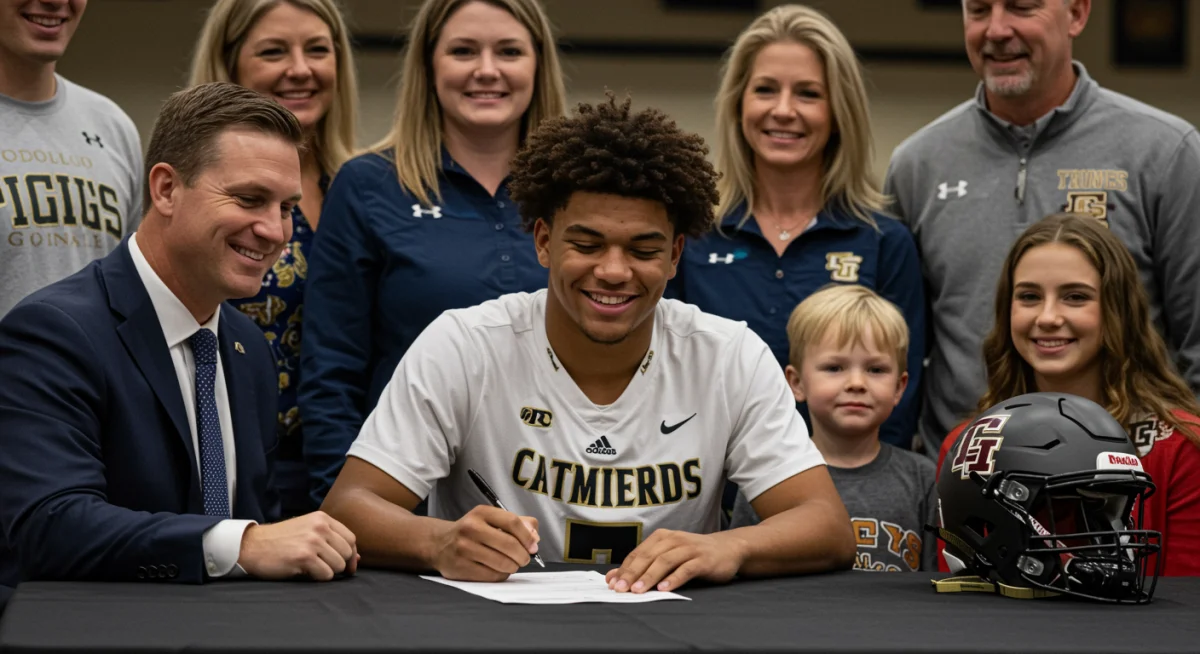
La Carta Nacional de Intención (NLI) es un acuerdo vinculante entre un futuro estudiante-atleta y una institución de la División I o División II de la NCAA. Cuando un recluta firma una NLI, acepta asistir a esa institución por un año académico y la institución acepta proporcionar ayuda financiera atlética para ese año. El programa NLI es administrado por la Asociación de Comisionados Colegiados (CCA).
Aspectos clave del NLI:
- Compromiso vinculante: Una vez firmado, un NLI vincula al estudiante-atleta a la institución y a la institución al estudiante-atleta.
- Ayuda financiera: Garantiza la ayuda financiera por un año académico, renovable cada año si el estudiante sigue siendo elegible y en buen estado.
- Prohibición de reclutamiento: Una vez que se firma un NLI, se prohíbe a otras instituciones de la NCAA contratar al estudiante-atleta.
- Sanciones por incumplimiento: si un estudiante-atleta firma un NLI y no se inscribe en esa institución, por lo general pierde un año de elegibilidad y debe cumplir un requisito de residencia de un año en su nueva institución. Las exenciones son posibles en determinadas circunstancias.
Comprender el NLI es primordial para cualquier recluta considerando el período de firma anticipada de 2026, ya que significa un compromiso serio y oficial.
Impacto en las estrategias de reclutamiento para la Clase de 2026
El período de firmas tempranas de 2026 influye profundamente en la forma en que los programas de fútbol americano universitario abordan el reclutamiento. El cambio significa que la mayoría de una clase de reclutamiento a menudo se bloquea antes del día de la firma tradicional, lo que obliga a los entrenadores a ajustar sus plazos y prioridades.
Para entrenadores universitarios:
- Evaluación acelerada: los entrenadores deben identificar y evaluar los mejores prospectos mucho antes. Las ofertas se extienden antes, y el impulso por los compromisos comienza mucho antes del último año.
- Relaciones tempranas intensificadas: Construir relaciones sólidas y de confianza con los reclutas y sus familias al principio del proceso es más crítico que nunca. Esto ayuda a asegurar los compromisos tempranos.
- Cambio de visitas oficiales: Si bien las visitas oficiales se realizaron tradicionalmente en el otoño, muchas ahora ocurren en la primavera y el verano antes del período de firma temprana, lo que permite a los reclutas tomar decisiones informadas con anticipación.
- Gestión de la junta: los entrenadores deben administrar cuidadosamente su junta de reclutamiento, equilibrando los compromisos tempranos con la necesidad de ocupar lugares para los últimos brotes o las posibles adiciones del portal de transferencia.
- Integración del portal de transferencia: El portal de transferencia, que a menudo se abre casi al mismo tiempo que el período de firma inicial, añade otra capa de complejidad. Los entrenadores están tratando simultáneamente de firmar reclutas de secundaria y adquirir talento del portal.
Para futuros estudiantes-atletas (clase de 2026):
- Toma de decisiones anteriores: los reclutas sienten la presión de tomar sus decisiones universitarias mucho antes que en épocas anteriores. Muchos optan por comprometerse verbalmente durante su tercer año o el verano anterior a su último año.
- La investigación exhaustiva es clave: con menos tiempo entre el compromiso y la firma, es esencial una investigación exhaustiva sobre los programas académicos, el personal de entrenamiento, la cultura de equipo y la vida en el campus antes de hacer una promesa verbal.
- Ofertas de navegación: La gestión de múltiples ofertas y las visitas oficiales pueden resultar abrumadoras. Es crucial buscar la orientación de la familia, los entrenadores y los mentores.
- El fenómeno ‘flip’: mientras el NLI es vinculante, los compromisos verbales no lo son. El período previo al período de firma anticipada de 2026 aún puede ver a los reclutas ‘volviendo’ sus compromisos verbales con otras escuelas.
Actualizaciones recientes y cambios potenciales para el período de firma anticipada de 2026
El panorama de reclutamiento de la NCAA es dinámico, con reglas e interpretaciones que cambian con frecuencia. Si bien la estructura central del período de firma inicial se ha mantenido constante, varios factores podrían influir en el período de firma temprana de 2026:
nil (nombre, imagen y semejanza) y su papel:
La legislación NIL ha cambiado irrevocablemente los deportes universitarios, y su impacto en el reclutamiento, incluido el período de firma temprana de 2026, no puede ser exagerado. Si bien los pagos directos de compromisos están prohibidos, las oportunidades nulas pueden ser un factor significativo en la decisión de un recluta. Es probable que los prospectos y sus familias consideren el potencial de ganancias nulas al evaluar las escuelas, y los programas con colectivos robustos de cero pueden tener una ventaja. La NCAA continúa lidiando con las regulaciones de NIL, y cualquier aclaración o cambio de regla más podría afectar la forma en que se discute y utiliza NIL durante el período de firma temprana de 2026.
Dinámica del portal de transferencia:
El portal de transferencia se ha convertido en una fuerza dominante en el fútbol americano universitario. Sus ventanas a menudo se superponen con el período de firma inicial. Esto significa que los entrenadores están haciendo malabarismos con el reclutamiento de prospectos de secundaria con la necesidad urgente de abordar los agujeros de las listas a través del portal. Esta dinámica puede afectar la disponibilidad de becas para reclutas de secundaria, ya que se pueden realizar lugares para transferencias experimentadas. Para el período de firma temprana de 2026, la interacción entre el reclutamiento de la escuela secundaria y el portal de transferencia seguirá siendo una consideración estratégica crítica para todos los programas.
Posibles ajustes de reglas:
La NCAA revisa constantemente su calendario y reglas de reclutamiento. Si bien no se encuentran actualmente en el horizonte inmediato ninguna revisión importante del período de firma temprana para 2026, las discusiones sobre los límites de visitas oficiales, los períodos de contacto e incluso la duración del período de firma en sí están en curso. Siempre es recomendable que los estudiantes atletas y sus familias se mantengan informados sobre los posibles ajustes de reglas que puedan estar más cerca del período de firma temprana de 2026.
Navegando por el período de firma temprana 2026: consejos para reclutas y familias
Para los atletas de la escuela secundaria de la clase de 2026, el período de firma temprana puede ser un período de inmensa emoción y estrés. Aquí hay algunos consejos para ayudar a navegar con éxito:
1. Comience temprano y sea proactivo:
El proceso de reclutamiento se ha acelerado. No espere hasta su último año para comenzar a pensar en las universidades. Comience a investigar escuelas, asistir a campamentos y crear carretes destacados al principio de su carrera en la escuela secundaria. Cuanto antes entres, mejor preparado estarás para el período de firma anticipada de 2026.
2. Priorice el ajuste sobre el flash:
Es fácil quedar atrapado en el encanto de los programas de renombre. Sin embargo, lo mejor para usted puede ser una escuela donde tenga una fuerte conexión con el cuerpo técnico, un programa académico adecuado y un camino claro hacia el tiempo de juego. Considere la cultura, la ubicación y la experiencia general de la escuela, no solo el prestigio del programa de fútbol.
3. Haga preguntas difíciles:
Durante las visitas oficiales y no oficiales, no tengas miedo de hacer preguntas difíciles a los entrenadores y jugadores actuales sobre el tiempo de juego, el apoyo académico, la dinámica del equipo y la futura estabilidad del entrenador. Obtenga claridad sobre los detalles de la beca y las posibles oportunidades nulas. El período de firma temprana de 2026 es una decisión a largo plazo.
4. Comprender el NLI:
Antes de firmar cualquier cosa, asegúrese de que usted y su familia entiendan completamente las implicaciones de la Carta Nacional de Intención. Consulte con un asesor de confianza o un asesor legal si tiene alguna duda. Recuerde, es un acuerdo vinculante.
5. Disponer de un sistema de apoyo:
Apóyate en tu familia, entrenadores de secundaria y mentores. Pueden brindarle una guía invaluable, ayudarlo a evaluar las ofertas de manera objetiva y ofrecer apoyo emocional durante lo que puede ser un período muy exigente. Tomar una decisión para el período de firma anticipada de 2026 es un esfuerzo de equipo.
El papel de los académicos y la elegibilidad en el período de firma temprana 2026
Si bien la destreza atlética suele ser el enfoque, la elegibilidad académica sigue siendo un requisito no negociable para firmar un NLI y competir en la División I o II de la NCAA. Los futuros estudiantes-atletas de la Clase de 2026 deben cumplir con los estándares académicos específicos establecidos por el Centro de Elegibilidad de la NCAA.
Requisitos del Centro de Elegibilidad de la NCAA:
- Cursos básicos: Un número mínimo de cursos básicos aprobados por la NCAA en materias como Inglés, Matemáticas, Ciencias y Ciencias Sociales.
- GPA: un GPA mínimo del curso básico en una escala de 4.0.
- Pruebas estandarizadas: Si bien muchas escuelas han sido opcionales, el Centro de Elegibilidad de la NCAA todavía tiene pautas con respecto a los puntajes SAT/ACT para ciertas situaciones, aunque estas se han vuelto menos estrictas en los últimos años. Es importante consultar las últimas políticas.
- Certificación de Amateurismo: Todos los estudiantes-atletas deben estar certificados como aficionados.
No cumplir con estos requisitos académicos puede impedir que un recluta firmar un NLI, incluso si una escuela les ofrece una beca. Por lo tanto, mantener calificaciones sólidas durante toda la escuela secundaria es tan vital como tener un buen rendimiento en el campo para cualquiera que apunte al período de firma temprana de 2026.
Mirando hacia el futuro: el impacto a largo plazo del período de firma temprana
El período de firmas tempranas de 2026 continuará con la tendencia de configurar el reclutamiento de fútbol americano universitario en un esfuerzo acelerado durante todo el año. Su impacto duradero incluye:
- Incremento de la competencia por confirmaciones tempranas: programas que pueden asegurar que los mejores talentos obtengan una ventaja significativa, permitiéndoles enfocar los recursos en necesidades específicas restantes.
- Drama de febrero reducido: Si bien todavía existe el Día de la firma de febrero, sirve principalmente como un período de limpieza para un grupo más pequeño de reclutas sin firmar, adiciones tardías o transferencias.
- Evolución del personal de reclutamiento: Los programas de fútbol americano universitario han ampliado sus departamentos de reclutamiento para manejar el aumento de la carga de trabajo y los plazos anteriores.
- Cartas más estables (potencialmente): para los programas, asegurar la mayor parte de su clase puede llevar a una planificación de lista más estable, aunque el portal de transferencia lo complica.
El período de firma temprana, incluido el próximo período de firma temprana de 2026, ha movido significativamente la aguja en el fútbol americano universitario. Exige adaptabilidad de los entrenadores, la diligencia de los reclutas y una perspectiva informada de los fanáticos que quieren comprender las futuras estrellas del juego.
Preguntas frecuentes sobre el período de firma temprana
P: ¿Puede un recluta firmar un NLI durante el período de firma anticipada de 2026 y luego transferirse antes de inscribirse?
R: Una vez que se firma un NLI, es un acuerdo vinculante. Si un recluta firma una NLI y decide no inscribirse en esa institución, generalmente enfrenta sanciones, incluida la pérdida de un año de elegibilidad y un requisito de residencia en su próxima institución. Las exenciones son posibles pero no garantizadas.
P: ¿Qué pasa si un entrenador se va después de que un recluta firma durante el período de firma anticipada de 2026?
R: Esta es una preocupación común. Un NLI está firmado con la institución, no con un entrenador específico. Si un entrenador se va, el NLI generalmente permanece vinculante. Sin embargo, en circunstancias específicas, el programa NLI puede otorgar una liberación a un prospecto firmado si el entrenador en jefe que los reclutó abandona la institución después de que se firme el NLI. Cada caso se revisa individualmente.
P: ¿Todos los deportes tienen un período de firma temprana?
R: Si bien muchos deportes de la NCAA tienen un período de firma temprana, las fechas y duraciones específicas pueden variar. El período de firmas tempranas de fútbol es particularmente prominente debido al alto perfil del deporte.
P: ¿Cómo afecta el período de firma anticipada de 2026 a los walk-ons?
R: El Programa Nacional de Cartas de Intención es específicamente para estudiantes-atletas que reciben ayuda financiera atlética. Los walk-ons preferidos (a quienes se les garantiza un lugar en la lista pero no una beca inicial) no firman una NLI. Sus compromisos suelen ser verbales o mediante acuerdos de admisión institucional.
P: ¿Dónde puedo encontrar información oficial sobre el Período de Firma Temprana 2026 y el Programa NLI?
R: La información más precisa y actualizada siempre se puede encontrar en el sitio web oficial de la NCAA (ncaa.org) y el sitio web nacional de cartas de intención (nationalletter.org). Estos recursos proporcionan reglas, fechas y preguntas frecuentes detalladas.
El camino por delante para la Clase de 2026
El período de firma anticipada de 2026 es más que una fecha en el calendario; Es un evento histórico en el viaje de cientos de jóvenes atletas que persiguen sus sueños de jugar fútbol americano universitario. Representa la culminación de innumerables horas de capacitación, estudio académico y planificación estratégica. Para los fanáticos, es el primer vistazo real de la futura composición de sus equipos favoritos, ofreciendo una vista previa del talento que adornará la parrilla en los próximos años.
A medida que continúa desarrollándose el ciclo de reclutamiento para la Clase de 2026, espere una intensa competencia, compromisos dramáticos y la evolución continua de las estrategias impulsadas por el período de firma temprana y la influencia siempre presente del Portal de Transferencia y NIL. Mantenerse informado sobre estos desarrollos proporcionará una apreciación más profunda de las complejidades y la emoción que definen el reclutamiento de fútbol americano universitario.
Ya sea que sea un posible recluta, un fan dedicado o un entrenador que moldee la próxima generación de talento, el Periodo de firmas tempranas de 2026 se erige como una coyuntura crítica, que exige atención, preparación y comprensión de su profundo impacto en el deporte que todos amamos.