MLS Next Pro: Pathway to Stardom by 2027

MLS Next Pro is rapidly emerging as a pivotal development league, projected to produce 30% of Major League Soccer’s future stars by 2027, offering a structured and competitive environment for young talent.
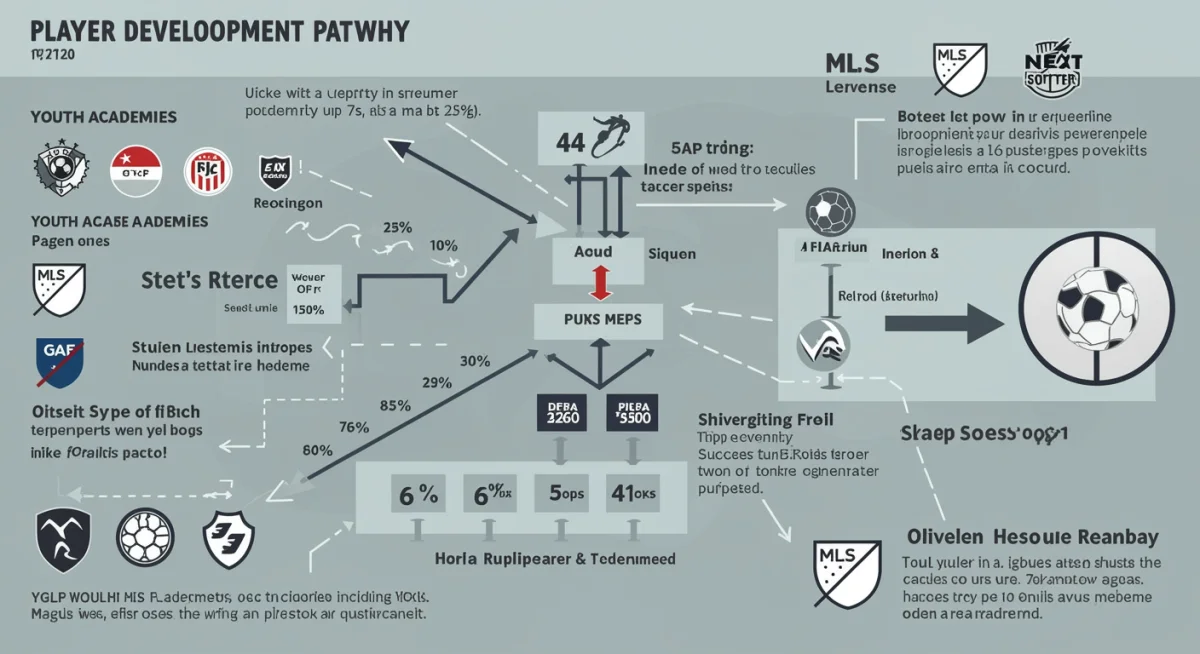
The landscape of professional soccer in North America is evolving at an exhilarating pace, with a clear focus on nurturing homegrown talent. MLS Next Pro has quickly established itself as a crucial stepping stone, poised to deliver 30% of future MLS stars by 2027 through practical solutions and insider knowledge. This league isn’t just about playing games; it’s a meticulously designed system aimed at bridging the gap between academy soccer and the pinnacle of Major League Soccer.
the rise of MLS Next Pro: a strategic imperative
MLS Next Pro was launched with a clear vision: to accelerate the development of young players within a professional environment, ensuring a steady pipeline of talent for MLS clubs. This strategic move addresses the historical challenge of integrating promising youth academy graduates into senior teams, providing a highly competitive platform that mimics the demands of MLS.
The league’s rapid expansion and increasing competitiveness are testaments to its success. It offers a crucial bridge, allowing players to refine their skills, adapt to professional tactics, and gain valuable experience without the immense pressure of immediate MLS first-team demands. This measured approach is fundamental to long-term player growth and ultimately, the quality of Major League Soccer itself.
bridging the development gap
One of the primary goals of MLS Next Pro is to effectively bridge the chasm between youth academy play and the professional ranks. Many talented young players previously found themselves in a difficult position after graduating from academies, often lacking a clear, competitive pathway to senior football.
- Consistent Professional Environment: Players train and compete daily in a fully professional setting.
- High-Level Competition: Matches against other top development teams challenge players technically and tactically.
- Direct Oversight by MLS Clubs: Teams are directly affiliated with MLS clubs, ensuring alignment with first-team philosophies.
- Exposure to Scouting: Regular performances in MLS Next Pro provide a platform for MLS coaches and scouts.
This structured environment ensures that players are constantly evaluated and pushed to improve, reducing the risk of stagnation that can occur in less competitive leagues. The direct affiliation with MLS clubs means that player development is closely monitored, with tailored programs designed to address individual needs.
The strategic imperative behind MLS Next Pro is not merely about creating another league; it’s about optimizing the entire player development ecosystem. By providing a clear and challenging pathway, the league aims to minimize the attrition rate of talented young players and maximize their potential to reach the highest level of the sport in North America. This investment in talent is expected to yield significant returns for MLS clubs in the coming years, both on the field and potentially in the transfer market.
player identification and recruitment strategies
Identifying and recruiting the right talent is paramount to the success of any development league, and MLS Next Pro is no exception. Clubs employ sophisticated scouting networks and data analytics to pinpoint players who not only possess technical skill but also the mental fortitude and adaptability required for professional soccer.
The recruitment process often begins within the clubs’ own academies, where players are nurtured from a young age. However, the league also serves as a vital platform for identifying talent from various other sources, including college soccer, international markets, and even other domestic youth leagues.
Modern scouting goes beyond simply watching games; it involves a deep dive into player data, including physical metrics, technical efficiency, tactical understanding, and psychological profiles. This holistic approach ensures that clubs are investing in well-rounded individuals who are prepared for the rigors of professional development.
data-driven scouting and analytics
In today’s soccer landscape, data plays an indispensable role in player identification. MLS Next Pro teams leverage advanced analytics to assess potential recruits and track the progress of their own players. This includes performance metrics, physical output, and even cognitive assessments.
- Performance Metrics: Analyzing passes completed, tackles won, key passes, and defensive actions.
- Physical Data: Tracking sprint speeds, distance covered, and recovery rates to assess athletic potential.
- Video Analysis: Detailed review of game footage to evaluate decision-making and tactical awareness.
- Psychological Profiling: Assessing attitude, work ethic, and resilience, crucial for long-term development.
By combining traditional scouting with cutting-edge data analysis, clubs can make more informed decisions about which players to invest in and how best to support their development. This scientific approach helps to minimize risk and maximize the potential for success, ensuring that the league attracts and retains the most promising young talent.
The emphasis on data-driven scouting also allows for early identification of players who might be overlooked by traditional methods, creating a more inclusive and diverse talent pool. This comprehensive strategy is what sets MLS Next Pro apart as a modern development league, committed to innovation in player recruitment and progress.
impact on MLS first teams and overall league quality
The ultimate goal of MLS Next Pro is to enhance the quality of Major League Soccer by providing a consistent stream of well-prepared players. The league’s success is increasingly evident in the number of players transitioning from MLS Next Pro rosters to making significant contributions to their respective MLS first teams.
This direct pathway not only reduces the need for expensive external transfers but also fosters a stronger sense of club identity and continuity. Players who come through the club’s own development system often have a deeper understanding of the club’s philosophy and a stronger connection with the local fanbase.
The presence of a robust development league also allows MLS coaches to experiment with tactics and provide playing time to fringe players or those returning from injury, without compromising the competitiveness of the first team. This flexibility is invaluable for squad management and overall team performance.
nurturing homegrown talent
The focus on homegrown talent is a cornerstone of MLS Next Pro’s mission. By developing players within their own system, MLS clubs can cultivate a unique playing style and create a stronger bond with their community. These players often become fan favorites and embody the club’s values.
The increasing number of MLS Next Pro graduates making an impact in MLS demonstrates the effectiveness of this development model. These players arrive at the first team ready to compete, having already experienced professional demands and expectations at a slightly lower but still highly competitive level.
Moreover, the financial benefits are substantial. Developing talent internally is far more cost-effective than acquiring established players through transfers. This allows clubs to reinvest resources into further improving their academies and development pathways, creating a virtuous cycle of talent production.
The impact extends beyond individual players; it elevates the overall standard of play across MLS. As more well-trained and tactically astute players emerge from MLS Next Pro, the league becomes more competitive, entertaining, and globally recognized. This continuous infusion of quality talent is vital for the long-term growth and success of Major League Soccer on the international stage.
challenges and opportunities for young prospects
While MLS Next Pro offers an unprecedented opportunity for young soccer players, it also presents its own set of challenges. The transition to professional soccer is never easy, requiring immense dedication, resilience, and a constant drive for improvement. Players must navigate increased physical demands, tactical complexities, and intense competition for limited spots.
However, these challenges are precisely what forge elite athletes. The league’s structured environment, coupled with dedicated coaching and support staff, is designed to help players overcome these hurdles. Opportunities abound for those who embrace the learning process and demonstrate a consistent commitment to their craft.
The exposure gained in MLS Next Pro is invaluable. Players are not only seen by their own club’s first-team staff but also by scouts from other MLS teams, as well as international clubs. This broad visibility can open doors to various career paths, even if an immediate MLS first-team spot isn’t secured.
mental fortitude and adaptability
Beyond technical and physical skills, mental fortitude and adaptability are critical attributes for success in MLS Next Pro. Players must be able to handle pressure, learn from mistakes, and adjust to different tactical systems and coaching styles. The professional journey is often nonlinear, with ups and downs that test a player’s resolve.
- Resilience: Bouncing back from setbacks, injuries, or periods of lower performance.
- Tactical Intelligence: Quickly understanding and executing complex game plans.
- Professionalism: Maintaining high standards on and off the field, including diet and recovery.
- Continuous Learning: A willingness to constantly improve and adapt to new challenges.
Clubs invest heavily in sports psychology and mentorship programs to support players’ mental well-being and development. This holistic approach recognizes that a player’s mental state is just as important as their physical condition or technical ability in achieving long-term success.
For young prospects, MLS Next Pro represents a crucible where dreams are tested and refined. It’s a demanding environment, but one that is meticulously designed to prepare them for the ultimate goal: playing in Major League Soccer. The opportunities for growth are immense for those who are willing to put in the work and embrace the challenges.
coaching and tactical development
The quality of coaching in MLS Next Pro is a critical factor in the league’s success as a development pathway. Coaches are not merely focused on winning games but are primarily tasked with the holistic development of individual players. This involves a deep understanding of modern tactical trends, player psychology, and long-term athletic development principles.
MLS Next Pro coaching staffs often feature former professional players and highly qualified instructors who have experience at various levels of the game. Their expertise is crucial in guiding young players through the complexities of professional soccer, both on and off the field. The tactical approaches employed in the league often mirror those used in MLS, ensuring a seamless transition for players moving up.
Emphasis is placed on developing versatile players who can operate in multiple positions and adapt to different formations. This tactical flexibility is highly valued in modern soccer and prepares players for the diverse demands of MLS competition.
innovative training methodologies
MLS Next Pro teams utilize innovative training methodologies that incorporate the latest sports science and technology. This includes personalized training plans, advanced recovery protocols, and detailed video analysis sessions. The goal is to optimize every aspect of a player’s preparation and performance.
- Individualized Training: Tailored programs to address specific player strengths and weaknesses.
- Sports Science Integration: Use of GPS trackers and heart rate monitors to optimize physical conditioning.
- Tactical Periodization: Training cycles designed to peak performance for specific matches.
- Video Feedback: Regular sessions to review performance and reinforce tactical concepts.
Coaches also prioritize creating a positive and challenging learning environment where players feel empowered to take risks and learn from their mistakes. This progressive approach to coaching fosters creativity and independent decision-making, qualities essential for success at the highest levels of the sport.
The continuous professional development of coaches within MLS Next Pro is also a key component. Workshops, seminars, and networking opportunities ensure that coaching staff remain at the forefront of soccer development, bringing the best practices to their young players. This commitment to coaching excellence directly translates into better-prepared players for MLS.
the 2027 projection: a realistic outlook
The projection that MLS Next Pro will contribute 30% of future MLS stars by 2027 is ambitious yet grounded in the league’s strategic design and early successes. This outlook is based on several factors, including the continued expansion of the league, the increasing investment from MLS clubs, and the undeniable quality of talent emerging from its ranks.
As the league matures, its infrastructure will become even more robust, attracting a wider pool of talent and refining its development processes. The direct alignment with MLS clubs ensures that the pathway remains clear and incentivized for players to progress. The success stories of current MLS players who have come through MLS Next Pro serve as powerful motivators for the next generation.
Moreover, the league’s focus on providing meaningful playing time to young players, rather than relying solely on experienced veterans, is a crucial differentiator. This consistent exposure to high-level competition is what truly accelerates development and prepares players for the demands of Major League Soccer.
factors driving the 30% target
Achieving the 30% target by 2027 hinges on several key elements that are actively being implemented and refined within the MLS Next Pro framework. These factors collectively contribute to a highly effective player development ecosystem.
- Increased Club Investment: More resources allocated to academies and MLS Next Pro teams.
- Enhanced Scouting Networks: Broader reach for identifying talent domestically and internationally.
- Improved Coaching Standards: Continuous professional development for coaches.
- Strategic Player Management: Careful planning of playing time and loan opportunities.
- League Stability and Growth: A stable and expanding league providing consistent competition.
The commitment from Major League Soccer to this development pathway is unwavering, recognizing that a strong domestic talent pool is essential for the league’s long-term prosperity and international competitiveness. The 2027 projection is not just an arbitrary number; it’s a strategic goal backed by significant investment and a clear development philosophy.
The continued evolution of MLS Next Pro suggests that this target is not only realistic but potentially conservative. The league is rapidly becoming the premier proving ground for young talent in North America, solidifying its role as an indispensable component of the MLS ecosystem and a beacon for aspiring professional soccer players.
| Key Aspect | Brief Description |
|---|---|
| Development Pathway | MLS Next Pro provides a structured bridge from youth academies to MLS. |
| Talent Identification | Utilizes advanced scouting and data analytics for comprehensive player assessment. |
| Impact on MLS | Enhances MLS quality by supplying well-prepared homegrown players directly. |
| 2027 Projection | Aims to produce 30% of future MLS stars, driven by strategic investment and growth. |
frequently asked questions about MLS Next Pro
MLS Next Pro serves as a professional development league, bridging the gap between youth academies and Major League Soccer. Its main goal is to provide young players with a competitive environment to refine their skills and prepare for MLS first teams.
It provides a direct pipeline for homegrown talent, reducing reliance on external transfers and fostering club identity. Clubs can develop players in-house, ensuring they fit the team’s tactical philosophy and are ready for MLS competition.
The league primarily features academy graduates, college soccer standouts, and promising young international talents. These players are typically under 23 years old, aiming to make their mark in professional soccer and ascend to MLS.
Data analytics is crucial for player identification, performance tracking, and tactical development. It helps coaches and scouts make informed decisions about recruitment, training methodologies, and player progression, optimizing potential.
Yes, the 30% projection is considered realistic due to increasing club investment, enhanced scouting, improved coaching, and the league’s strategic growth. The consistent flow of talent and success stories support this ambitious goal.
conclusion
MLS Next Pro has swiftly evolved from a concept into a cornerstone of player development in North American soccer. Its structured pathway, commitment to holistic player growth, and strategic alignment with Major League Soccer are clearly yielding significant results. The ambitious yet achievable goal of producing 30% of future MLS stars by 2027 underscores the league’s vital role. As MLS continues to grow in stature, the continuous infusion of well-prepared, homegrown talent from MLS Next Pro will be indispensable, ensuring a vibrant and competitive future for the sport across the United States.