MLS Playoff Format 2025: Guide to Rounds & Rules

The 2025 MLS Playoff Format introduces critical updates to the qualification process and tournament structure, providing fans with a clear understanding of how teams will navigate the path to the coveted MLS Cup.
Are you ready to dive into the excitement of postseason soccer? Understanding the MLS Playoff Format 2025 is crucial for every fan. As Major League Soccer continues to evolve, so too does its playoff structure, bringing new twists and turns that promise an exhilarating journey to the MLS Cup. This guide will break down every aspect, ensuring you’re fully prepared for the upcoming season’s dramatic conclusion.
Evolution of the MLS Playoff Format
Major League Soccer has consistently adapted its playoff format over the years, striving to enhance competition and fan engagement. The 2025 season is no exception, building on recent innovations to create a more compelling postseason. Changes often reflect the league’s growth, the expansion of teams, and the desire to reward regular-season performance while maintaining the drama of knockout football. It’s a delicate balance that the league office constantly fine-tunes.
Historically, the MLS playoffs have seen various iterations, from smaller fields to expanded formats. Each change aims to improve the competitive integrity and entertainment value. The 2025 format integrates lessons learned from previous seasons, focusing on clarity and excitement. Fans can expect a structure designed to highlight the best teams and deliver memorable matchups throughout October and November.
Key Historical Changes
- Expansion of Teams: As the league grew, so did the number of playoff spots, accommodating more clubs.
- Single-Elimination vs. Two-Legged Ties: The league has experimented with both to find the most thrilling approach.
- Wild Card Rounds: Introduced to add more preliminary drama and give bubble teams a chance.
The continuous evolution ensures that the MLS playoffs remain a dynamic and unpredictable spectacle. The league’s commitment to refining the format underscores its dedication to providing a top-tier sporting experience. Understanding this historical context helps appreciate the current structure and its potential impact on team strategies and fan expectations.
In essence, the evolution of the MLS Playoff Format is a testament to the league’s growth and its ongoing effort to optimize the postseason experience. Each adjustment, including those for 2025, is made with the dual goals of promoting competitive balance and captivating the audience, making the road to the MLS Cup more thrilling than ever.
Qualification Criteria for 2025
The path to the MLS playoffs begins with a strong regular season performance. For 2025, the qualification criteria have been refined to ensure that only the most consistent and deserving teams advance. Understanding these criteria is fundamental to following the playoff race from the opening whistle of the season. Teams will compete fiercely for every point, knowing the implications for their postseason hopes.
The league is divided into two conferences, Eastern and Western, and each conference will send a specific number of teams to the playoffs. This structure emphasizes regional rivalries and ensures that the conference champions are truly tested within their geographical divisions. Points accumulated throughout the regular season, based on wins and draws, are the primary determinant for seeding.
How Teams Secure Playoff Berths
- Top Seeds: The highest-ranked teams in each conference often secure direct berths into later rounds, bypassing initial play-in games.
- Wild Card Spots: Additional spots are allocated to teams just outside the guaranteed qualification zone, leading to intense competition late in the season.
- Tie-Breaking Procedures: In cases where teams finish with equal points, specific tie-breaking rules, such as goal difference and wins, come into play to determine final standings.
The detailed qualification process for the 2025 MLS Playoff Format aims to reward consistent high performance. Teams cannot simply rely on a few good results; sustained excellence over the entire regular season is paramount. This system encourages competitive play from start to finish, making every match critical. Fans will find themselves tracking standings closely, as even a single point can dramatically alter a team’s fate.
Ultimately, the qualification criteria for 2025 are designed to identify the strongest contenders from each conference. It sets the stage for a highly competitive playoff tournament, ensuring that the teams battling for the MLS Cup have truly earned their place through a rigorous regular season campaign.
The Wild Card Round: First Test of Resilience
The Wild Card Round serves as the thrilling curtain-raiser for the MLS Playoff Format 2025, providing an immediate dose of high-stakes drama. This single-elimination stage is designed to give teams on the cusp of qualification one last chance to prove their mettle. For clubs finishing just outside the automatic qualification spots, it’s an opportunity to upset higher-seeded teams and push deeper into the tournament.
This round typically involves the lowest-seeded playoff teams in each conference, battling it out in sudden-death matches. The intensity is palpable, as there’s no second leg or aggregate score to fall back on; every moment counts. Home-field advantage usually goes to the higher-seeded team, adding another layer of strategic importance to regular-season performance.
Understanding Wild Card Dynamics
- Single-Match Elimination: Teams must win or their playoff journey ends.
- Higher Seed Hosts: The team with the better regular-season record gets to play at home.
- Pathway to Round One: Winners advance to face the top seeds in the next stage.
The Wild Card Round is often where underdog stories begin and where early upsets can shake up the entire playoff bracket. It tests a team’s ability to perform under immense pressure, demanding tactical discipline and mental fortitude from the very first whistle. For fans, it offers immediate, nail-biting action that sets the tone for the rest of the postseason.
In conclusion, the Wild Card Round is a critical and exciting component of the 2025 MLS Playoff Format. It ensures that the playoff picture remains dynamic and unpredictable, offering a compelling start to the chase for the MLS Cup and rewarding teams that can seize their last opportunity.
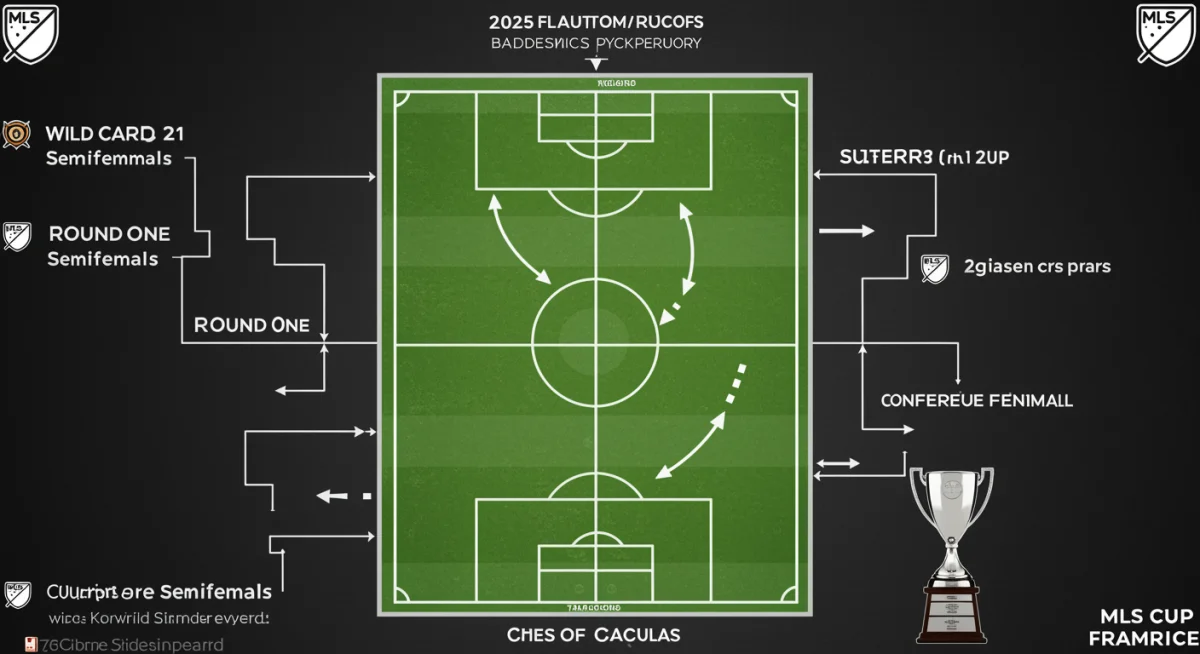
Round One: Best-of-Three Series
Following the intensity of the Wild Card matches, Round One of the MLS Playoff Format 2025 introduces a unique and captivating best-of-three series. This format significantly differentiates MLS playoffs from many other soccer tournaments, providing teams with multiple opportunities to showcase their strengths and adapt their strategies. It’s a true test of depth, consistency, and tactical flexibility over several games.
In this round, the higher-seeded teams (including those who advanced from the Wild Card, now re-seeded) will face off against their conference counterparts. Each series will be played until one team secures two wins, eliminating the other. This structure reduces the element of single-game luck and allows for a more comprehensive evaluation of which team is truly superior over a short series.
Series Structure and Home-Field Advantage
- Game 1: Higher seed hosts the first match.
- Game 2: Lower seed hosts the second match.
- Game 3 (if necessary): Higher seed hosts the decisive third match.
The best-of-three format brings a different kind of pressure. Teams must not only win individual games but also manage their squad rotation, tactical adjustments, and mental resilience across multiple encounters. It also offers fans more playoff action and prolonged rivalries within each series, building anticipation with every match played.
The strategic implications of the best-of-three series are immense. Coaches will need to carefully plan their lineups, substitutions, and game plans, knowing that adjustments can be made between matches. This format ensures that Round One of the 2025 MLS Playoff Format is not just about individual game performance but about sustained excellence within a short, intense series.
Ultimately, Round One’s best-of-three series is a pivotal stage in the MLS Playoff Format 2025, designed to thoroughly test the competing teams and provide an engaging spectacle for fans. It ensures that only the most resilient and strategically sound teams advance to the next demanding stage of the postseason.
Conference Semifinals and Finals: The Road to the Cup
As the MLS Playoff Format 2025 progresses, the Conference Semifinals and Conference Finals represent increasingly high-stakes encounters, narrowing the field down to the ultimate contenders. These rounds are where the cream truly rises to the top, as teams battle for the coveted titles of Eastern and Western Conference Champions. The intensity and quality of play escalate significantly at this stage.
These rounds typically revert to a single-elimination format, emphasizing that every match is a final. This creates immense pressure and requires teams to perform at their absolute peak. Home-field advantage remains a critical factor, often determined by regular-season standings, providing an added incentive for teams to finish strong.
Crucial Aspects of Later Rounds
- Single-Match Elimination: No second chances; win or go home.
- Home-Field Advantage: Higher seeds host, a significant boost in atmosphere and travel.
- Rivalry Intensification: Often features matchups between long-standing conference rivals, adding to the drama.
The Conference Semifinals and Finals are not just about winning games; they are about managing pressure, executing flawless game plans, and often, moments of individual brilliance. Every tactical decision, every substitution, and every set piece can be the difference between advancing to the MLS Cup and an early exit. These matches are a showcase of the league’s top talent and tactical prowess.
For fans, these rounds offer some of the most thrilling and memorable moments of the entire season. The stakes are incredibly high, and the quality of soccer is often at its peak. The winners emerge not just as conference champions but as battle-hardened contenders ready to face the best of the other conference.
In summary, the Conference Semifinals and Finals are the demanding crucible of the MLS Playoff Format 2025. They are designed to identify the truly dominant teams from each conference, setting the stage for the ultimate showdown in the MLS Cup, and delivering unparalleled excitement to the fans.
The MLS Cup Final: Ultimate Glory
The MLS Cup Final stands as the pinnacle of the MLS Playoff Format 2025, the ultimate destination for teams that have navigated the challenging postseason gauntlet. This single championship match determines the league champion, crowning the team that has proven its superiority through a grueling regular season and intense playoff battles. It’s a moment of unparalleled glory and a highlight of the North American sports calendar.
Traditionally, the MLS Cup Final is hosted by the team with the better regular-season record among the two finalists. This reward for regular-season excellence ensures that the grand finale often takes place in a vibrant, home-team atmosphere, amplifying the excitement and spectacle. The match itself is a standalone event, a winner-take-all contest where legacies are forged and dreams are realized.
What to Expect from the MLS Cup Final
- Single-Match Decider: One game, one champion.
- High-Stakes Atmosphere: Intense pressure, incredible fan support.
- Global Showcase: Attracts international attention and highlights the growth of MLS.
The MLS Cup Final is more than just a soccer match; it’s a celebration of the entire MLS season, bringing together fans from across the league. It showcases the best players, the best tactics, and the emotional culmination of months of hard work. The drama is inherent in its single-game format, where every pass, every tackle, and every shot holds immense significance.
Teams reaching this stage have overcome numerous challenges, demonstrating resilience, skill, and teamwork. The final match is their opportunity to etch their names into MLS history, hoist the coveted MLS Cup trophy, and celebrate with their supporters. The preparation for this game is meticulous, with coaches and players leaving no stone unturned.
Ultimately, the MLS Cup Final is the grand crescendo of the MLS Playoff Format 2025. It’s a testament to endurance, a battle for supremacy, and a moment that defines the season, delivering an unforgettable experience for both participants and spectators alike.
Recent Updates and Practical Solutions for Fans
The MLS Playoff Format 2025 isn’t just about the rules; it’s also about how these rules translate into a better experience for fans. Recent updates often include adjustments aimed at increasing accessibility, improving broadcast quality, and offering more engaging content. For fans, staying informed about these changes can significantly enhance their enjoyment of the postseason.
One of the practical solutions for fans is the widespread availability of streaming services and broadcast partnerships. MLS has been proactive in ensuring that matches are accessible across various platforms, allowing supporters to follow their favorite teams regardless of their location. This commitment to accessibility is crucial in a league with a growing national and international fanbase.
Fan Engagement Initiatives
- Enhanced Digital Content: More behind-the-scenes access, player interviews, and tactical breakdowns.
- Interactive Fan Zones: Pre-game activities and events for supporters attending matches.
- Improved Ticketing Systems: Streamlined processes for purchasing playoff tickets.
Understanding the implications of the format changes also means being aware of how they might affect scheduling. With best-of-three series and single-elimination games, the playoff schedule can be dynamic. Fans should keep an eye on official MLS announcements for game dates, times, and broadcast information. Many teams also offer dedicated playoff hubs on their websites with all the necessary details.
Moreover, the league often provides educational content, like explainer videos and infographics, to help fans grasp the nuances of the playoff structure. This commitment to clarity ensures that even new followers can quickly get up to speed with how the playoffs work. Practical solutions extend to travel planning for away games, with many clubs offering support and information for traveling supporters.
In conclusion, recent updates to the MLS Playoff Format 2025 are designed not only to refine the competition but also to provide practical solutions and an enriched experience for fans. From enhanced digital content to improved accessibility, the league is committed to making the playoff journey as engaging and enjoyable as possible for its dedicated supporters.
| Key Aspect | Description for 2025 |
|---|---|
| Qualification | Top teams from each conference qualify based on regular season points, with tie-breakers applied as needed. |
| Wild Card Round | Single-elimination matches for lower-seeded teams to advance to Round One. |
| Round One | Best-of-three series, requiring two wins to advance, with higher seeds hosting crucial games. |
| MLS Cup Final | A single championship match, hosted by the higher-seeded team, to determine the league champion. |
Frequently Asked Questions About the 2025 MLS Playoff Format
The exact number of qualifying teams can vary slightly based on league expansion, but typically a significant portion of teams from each conference make the cut for the postseason. This includes direct qualifiers and those entering via the Wild Card Round.
Round One features a best-of-three series. Teams must win two games to advance to the next stage, providing multiple chances for teams to showcase their skills and strategy, with home-field advantage for the higher seed.
Home-field advantage throughout the MLS Playoffs, including the MLS Cup Final, is generally awarded to the team with the better regular-season record. This rewards consistency and strong performance over the entire season.
The 2025 format builds on recent successful adjustments, focusing on the best-of-three series in Round One and single-elimination for later rounds. Specific minor rule tweaks are always possible, so checking official MLS sources is recommended.
In single-elimination playoff matches (Wild Card, Conference Semifinals, Conference Finals, MLS Cup Final), games tied after regulation time typically go directly to a penalty shootout to determine a winner, avoiding extra time.
Conclusion
The MLS Playoff Format 2025 is set to deliver another thrilling and unpredictable postseason. From the intense Wild Card clashes to the strategic best-of-three series in Round One, and finally, the high-stakes Conference Finals and the ultimate MLS Cup showdown, every stage is designed to test the mettle of competing teams. The league’s continuous evolution of its playoff structure reflects a commitment to competitive balance and fan excitement. By understanding the qualification criteria, round-by-round mechanics, and recent updates, fans can fully appreciate the intricate journey to MLS glory. Get ready for an unforgettable playoff season filled with drama, passion, and top-tier soccer action.