College Football Bowl Game Payouts 2025: Financial Implications & Revenue

College football bowl games in 2025 represent a complex financial ecosystem, distributing substantial payouts that are critical to the operational budgets and future investments of participating collegiate athletic programs.
The world of collegiate athletics, particularly college football, is a multi-billion dollar industry where every game, especially postseason bowls, carries significant weight. Understanding the financial implications of college football bowl games in 2025 is crucial for anyone following the sport, as these events are far more than just a grand finale for student-athletes. They are intricate financial machines, generating massive payouts and revenue streams that directly impact university athletic programs, their budgets, and their ability to compete and thrive.
The evolving landscape of bowl game economics
The financial model of college football bowl games is constantly shifting, influenced by media rights, sponsorship deals, and the ever-changing conference landscape. For 2025, these dynamics are particularly pronounced, with new playoff formats and conference realignments poised to reshape how revenue is generated and distributed. The stakes are incredibly high, as these financial windfalls can dictate everything from facility upgrades to coaching salaries and academic support for athletes.
media rights and sponsorship dominance
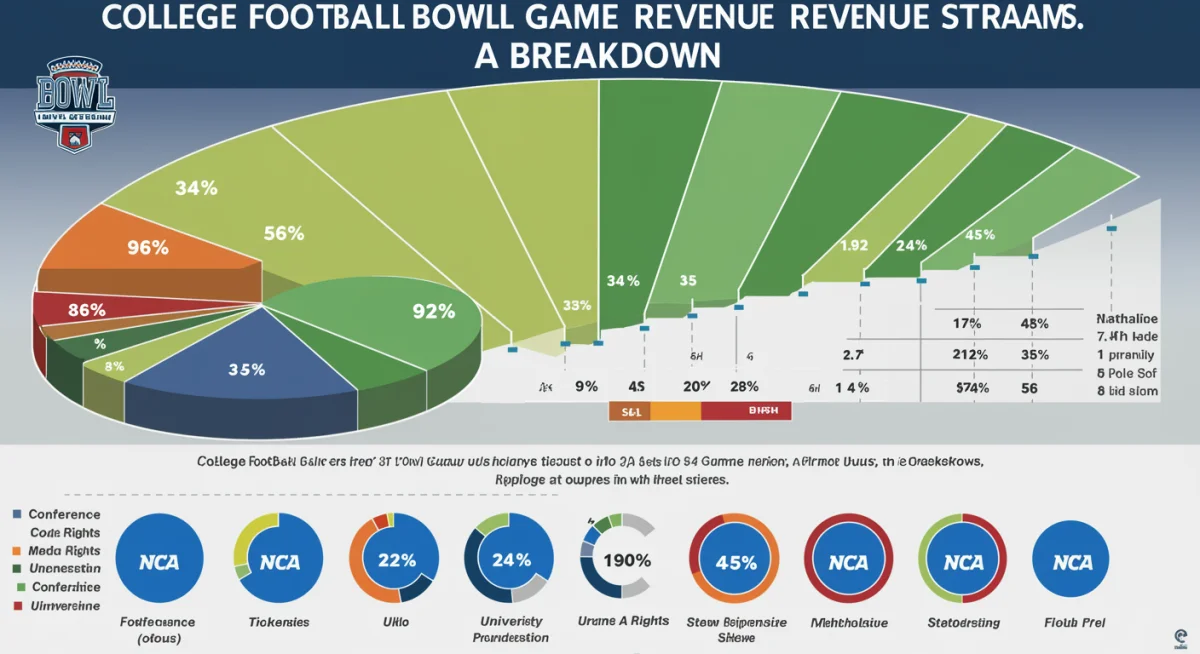
At the core of bowl game revenue are the colossal media rights agreements. Networks pay billions for the exclusive rights to broadcast these games, knowing they deliver massive viewership numbers. These deals are renegotiated periodically, and the 2025 season will reflect recent agreements that have only amplified the financial power of the sport.
- Television contracts: Long-term deals with major broadcast partners like ESPN, FOX, and CBS form the bedrock.
- Digital streaming platforms: The rise of streaming services has added another layer of revenue, bringing games to a wider, often younger, audience.
- Corporate sponsorships: Brands flock to bowl games for visibility, investing heavily in naming rights, on-field advertising, and fan engagement activations.
- Local and national partnerships: Beyond major sponsors, numerous companies contribute to the financial health of individual bowl games through various agreements.
Sponsorships, too, play a monumental role. From the title sponsors emblazoned across stadium names to the myriad of smaller brands advertising during commercial breaks, these partnerships inject millions into the bowl system. The ability of bowl organizers to attract and retain these lucrative sponsors directly correlates with the financial health of the games and, subsequently, the payouts to participating teams.
The economics of bowl games are not static; they are a living, breathing entity that responds to market forces and strategic decisions made by conference commissioners and athletic directors. The revenue generated from these events is vital for sustaining the high operational costs associated with running a successful collegiate athletic department, ensuring that programs can continue to invest in their student-athletes and maintain competitive facilities.
How bowl game payouts are calculated and distributed
Understanding how bowl game payouts are calculated and distributed is often opaque to the casual observer, yet it’s a critical aspect of their financial impact. The process is complex, involving various stakeholders and formulas that dictate how funds flow from the bowl committees to the conferences, and ultimately, to the individual schools.
the conference revenue sharing model
Conferences are the primary recipients of bowl game payouts. Each conference has agreements with specific bowl games, guaranteeing berths for their teams. The revenue generated by these bowl affiliations is pooled by the conference, and then distributed among its member institutions according to pre-determined formulas. These formulas often consider factors beyond just participation, such as television appearances or overall conference performance.
- Tiered distribution: Some conferences use a tiered system, where teams participating in higher-profile bowls receive a larger share.
- Equal distribution: Others opt for a more egalitarian approach, distributing bowl revenue equally among all member schools.
- Performance incentives: Bonuses might be awarded for winning a bowl game or for achieving certain academic metrics.
- NCAA and CFP oversight: The College Football Playoff (CFP) and NCAA also play roles in revenue distribution, especially for the playoff games themselves.
This conference-level distribution is crucial because it means that even schools that don’t make a bowl game often benefit financially from their conference’s collective bowl success. This shared revenue helps maintain a baseline of financial stability across the conference, supporting smaller programs alongside the traditional powerhouses.
The calculation of these payouts involves subtracting operational costs for the bowl game itself, including stadium rentals, event staffing, and promotional activities. What remains is the net revenue available for distribution. This net amount is then divided based on the agreements in place, ensuring that both the bowl organizers and the participating conferences receive their agreed-upon shares. The complexity of these agreements underscores the intricate financial web that supports college football’s postseason.
The direct impact on athletic program budgets
For individual athletic programs, the revenue from bowl games can be a game-changer, directly influencing their annual operating budgets. These funds are not merely supplementary; for many programs, they are essential for covering expenses and investing in future growth. The financial boost from a bowl appearance can have ripple effects across the entire athletic department, not just the football program.
funding for facilities and scholarships
A significant portion of bowl game revenue is often allocated to enhancing athletic facilities. State-of-the-art training centers, renovated stadiums, and improved locker rooms are critical for recruiting top talent and providing the best experience for student-athletes. These investments are often directly tied to the financial health bolstered by successful bowl seasons.
- Facility upgrades: Modernizing training rooms, weight rooms, and practice fields to attract recruits.
- Scholarship endowments: Ensuring that student-athletes receive full scholarships, covering tuition, room, board, and other expenses.
- Coaching salaries: Competitive salaries for coaching staff are essential for retaining top talent and building successful programs.
- Academic support services: Funding for tutors, academic advisors, and learning centers to support student-athletes’ academic success.
Furthermore, bowl game revenue often supports scholarship programs, ensuring that deserving student-athletes can pursue their education while competing at the highest level. The ability to offer competitive scholarships is a key differentiator in the intense recruiting battles that characterize college football.
Beyond facilities and scholarships, bowl revenue also assists in covering operational costs such as travel, equipment, and medical care for athletes. Without these substantial payouts, many programs would struggle to maintain their current level of competitiveness and support for their student-athletes. The direct financial injection from bowl games allows athletic departments to plan for the future, invest in their infrastructure, and ultimately, elevate their entire athletic enterprise.
The indirect economic benefits for universities and communities
The financial impact of college football bowl games extends far beyond the athletic departments and conferences, generating significant indirect economic benefits for universities and their surrounding communities. These events act as powerful economic engines, drawing in visitors and boosting local businesses, creating a win-win situation for all involved.
tourism and local business boom
When a university’s team qualifies for a bowl game, especially a prestigious one, it brings thousands of loyal fans, alumni, and media personnel to the host city. This influx of visitors translates directly into increased spending at hotels, restaurants, retail establishments, and local attractions, providing a substantial economic boost to the community.
- Hotel occupancy: Bowl games often lead to fully booked hotels, significantly increasing revenue for the hospitality sector.
- Restaurant and retail sales: Fans spend heavily on food, beverages, team merchandise, and souvenirs.
- Transportation services: Increased demand for flights, car rentals, and local public transport.
- Job creation: Temporary jobs are often created in the service industry to accommodate the surge in visitors.
For the universities themselves, participation in a bowl game elevates their national profile, leading to increased applications, alumni donations, and a stronger institutional brand. The media exposure alone is invaluable, showcasing the university to a national audience and reinforcing its academic and athletic prestige.
The ripple effect of these indirect benefits is considerable. Local governments often see an increase in tax revenue from sales and tourism, which can then be reinvested into public services and infrastructure. The sense of community pride and shared experience generated by a successful bowl season is also an intangible benefit that strengthens the bond between the university and its home city, fostering long-term support and engagement.
Challenges and criticisms of the current bowl system
Despite the undeniable financial benefits, the current college football bowl system is not without its challenges and criticisms. Debates often center on fairness, the distribution of wealth, and the impact on athlete welfare, prompting ongoing discussions about potential reforms and future structures.
fairness in revenue distribution and access
One of the primary criticisms revolves around the perceived imbalance in revenue distribution. While power conferences and their top teams benefit immensely, smaller conferences and less prominent programs often receive significantly less, despite their athletic achievements. This creates a financial disparity that can hinder competitive balance across the sport.
- Power Five vs. Group of Five: The vast financial gap between these conference tiers remains a contentious issue.
- Playoff access: Limited access to the College Football Playoff for non-Power Five teams restricts their highest earning potential.
- Athlete compensation: The ongoing debate about whether student-athletes should receive direct compensation for their contributions to this multi-billion dollar industry.
- Bowl game relevance: Some argue that an oversaturation of bowl games dilutes the significance and financial impact of lesser-known matchups.
Another point of contention is the selection process for bowl games, which can sometimes prioritize television appeal and fan travel over pure athletic merit. This can lead to frustration among teams and fans who feel their performance isn’t adequately rewarded with a desirable bowl invitation.
The increasing number of opt-outs by star players, who choose to forgo bowl games to prepare for the NFL Draft, also poses a challenge. While understandable from an individual perspective, it can diminish the on-field product and, consequently, the perceived value of some bowl matchups, potentially impacting future viewership and sponsorship interest. Addressing these criticisms will be crucial for the long-term sustainability and equitable growth of the bowl system.
The future of college football bowl finances beyond 2025
Looking beyond 2025, the financial landscape of college football bowl games is set for continued transformation. Key drivers of change include the expansion of the College Football Playoff, further conference realignments, and evolving media consumption habits. These factors will undoubtedly reshape how revenue is generated, distributed, and ultimately impacts collegiate athletic programs.
expanded playoff and new revenue streams
The expansion of the College Football Playoff to 12 teams is arguably the most significant change on the horizon. This expansion promises a dramatic increase in playoff-related revenue, which will undoubtedly cascade through the conferences and to their member institutions. The additional playoff games will command higher media rights fees and attract more sponsorship interest, creating new financial opportunities.
- Increased CFP revenue: More playoff games mean substantially larger media rights deals and greater overall revenue for participating conferences.
- Conference realignment impacts: Further shifts in conference membership will redefine revenue shares and bowl affiliations.
- NIL considerations: Name, Image, and Likeness (NIL) deals will continue to evolve, potentially impacting how players are compensated around bowl season.
- Global expansion potential: Discussions around international games or even global fan engagement could unlock new revenue streams.
Furthermore, the ongoing trend of conference realignment will continue to influence bowl affiliations and revenue distribution models. As conferences grow and shift, their collective bargaining power for media rights and bowl tie-ins changes, directly affecting the financial outlook for their member schools. The pursuit of greater financial stability and competitive advantage drives many of these strategic moves.
The future will also likely see an increased focus on digital engagement and personalized fan experiences, potentially opening up new avenues for revenue generation beyond traditional broadcast rights and ticket sales. As technology evolves, so too will the methods by which college football capitalizes on its immense popularity, ensuring that bowl games remain a cornerstone of its financial success and cultural significance for decades to come.
| Key Financial Aspect | Brief Description |
|---|---|
| Media Rights Deals | Primary revenue source, billions paid by networks for broadcast rights, influencing payouts. |
| Conference Distribution | Conferences pool bowl revenue and distribute to member schools, often based on formulas. |
| Program Budget Impact | Funds facilities, scholarships, and coaching salaries, crucial for program competitiveness. |
| Expanded CFP | 12-team College Football Playoff will significantly increase overall playoff revenue and payouts. |
Frequently asked questions about bowl game finances
Bowl game payouts are critical to university athletic budgets, often providing millions of dollars. These funds are used for facility upgrades, athlete scholarships, coaching salaries, and general operational costs. They allow programs to remain competitive and invest in student-athlete welfare and development.
The primary sources of revenue for bowl games include lucrative media rights deals with television networks, corporate sponsorships (including naming rights), ticket sales, and merchandise. These diverse streams contribute to the substantial payouts distributed to participating conferences and schools.
Bowl game revenue is typically paid to conferences, not directly to individual schools. Each conference then distributes this pooled revenue among its member institutions based on pre-established formulas, which can vary from equal shares to tiered distributions favoring bowl participants or higher-ranked teams.
The expanded 12-team College Football Playoff is expected to generate significantly more revenue through increased media rights and sponsorship opportunities. This will result in larger payouts for participating conferences and schools, further solidifying the financial foundation of college football’s postseason.
Absolutely. Host cities experience substantial economic benefits from bowl games due to increased tourism. Fans and media spend heavily on hotels, restaurants, transportation, and local attractions, generating significant revenue for local businesses and increasing tax income for the city.
Conclusion
The financial implications of college football bowl games in 2025 underscore their immense importance to the sport’s ecosystem. Far from being mere exhibition matches, these games serve as critical financial conduits, channeling billions of dollars through media rights, sponsorships, and fan engagement. This revenue directly fuels athletic programs, enabling investments in facilities, scholarships, and coaching staff, all while generating significant economic boosts for host communities. As the College Football Playoff expands and conference alignments continue to evolve, the financial stakes will only grow, further cementing bowl games as indispensable pillars of collegiate athletics. Their complex financial architecture is a testament to the sport’s enduring popularity and its profound economic footprint.